Quarterly Estimated Taxes: Stop Getting Caught Off Guard Every Quarter
🕐 Read Time 5 Minutes

Key Takeaways
Make tax planning part of your regular cash flow management throughout the year.
Keep tax money separate from the cash you use to run your business.
Revisit your tax plan when your business income changes significantly.
You know quarterly taxes are coming. You may even have the payment dates saved on your calendar. Then the deadline gets close, you check the business account, and suddenly you’re wondering where that money is supposed to come from.
Quarterly tax payments become harder to manage when the money earmarked for them stays mixed in with the cash you use to run your business. Preparing for taxes throughout the year can keep the deadline from catching you short on cash.
Instead of being surprised every quarter, make taxes part of your cash flow all year long.
What Are Quarterly Estimated Taxes?
When you worked for someone else, taxes were probably taken out of every paycheck before the money ever reached your bank account. As a business owner, that responsibility often lands on you.
Money comes into your business without Uncle Sam taking his share first. It can be tempting to look at that bank balance and think all of it is available for payroll, software, supplies, owner’s pay, or whatever else the business needs that week. Unfortunately, your bank balance doesn’t come with a little note telling you how much of it belongs to the IRS.
Sole proprietors, partners, and S corporation shareholders generally need to make estimated tax payments if they expect to owe $1,000 or more when they file their return. Those payments can include income tax and self-employment tax.
How much should you set aside? That’s where your tax professional comes in. Your income, business structure, deductions, credits, and household finances can all affect the number. Once you know how much to set aside, you can build that amount into your business cash flow throughout the year.
When Are Quarterly Estimated Taxes Due?
Estimated tax payments are due four times per year:
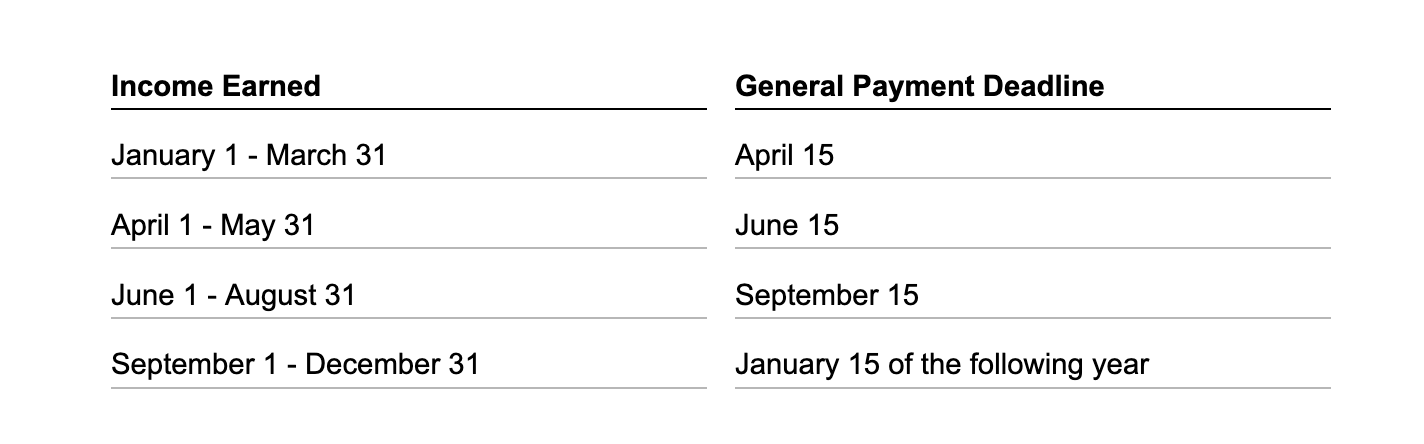
If a due date falls on a weekend or legal holiday, the deadline moves to the next business day.
The payment periods aren’t four equal three-month quarters, so it’s a good idea to put the quarterly tax payment deadlines on your calendar rather than assuming you know when the next one is coming.
Why Quarterly Tax Payments Can Create a Cash Flow Problem
Knowing when a payment is due solves only part of the problem.
For example, your business has a great month and brings in $30,000. That balance can make you feel like you have plenty of cash available. You pay business expenses, take your owner’s pay, and finally replace the computer that’s been hanging on by a thread
Then the tax deadline arrives. The money that looked available wasn’t necessarily all yours to spend. Some of it already had a job. You just hadn’t separated it yet.
That’s where tax planning and cash flow planning meet. If you regularly find yourself wondering why a profitable business still feels short on cash, start with The Small Business Owner’s Guide to Better Cash Flow Planning. It explains how to give your business income specific jobs instead of managing everything from one big pile of money.
Stop Saving for Taxes Quarterly
Don’t let the word “quarterly” dictate how you prepare for the payment. You may pay estimated taxes quarterly, but you don’t have to save for them quarterly.
Create a separate savings account for taxes and move money into it regularly as revenue comes into your business.
This is one reason I love the Profit First system. Your bank balance stops being one giant number that has to cover everything. Your money is allocated based on what it needs to do for the business, including paying taxes.
What This Can Look Like in Your Business
Let’s go back to that $30,000 month. Rather than leaving all of it in one account and spending from it as expenses come up, you follow your regular allocation schedule. A predetermined portion goes into your tax account. The rest is allocated for owner’s pay, operating expenses, profit, and other priorities.
Next month, you do it again.
When the next quarterly tax payment is due, you aren’t trying to produce several months’ worth of tax money from that week’s cash flow. You’ve been preparing for the payment a little at a time.
Tax Planning for Business Owners Means Adjusting as You Grow
The amount you set aside for taxes in January may not be the right amount six months later. You might add a new client or income stream, or your spouse could change jobs, or your business could have a much stronger year than expected.
Your tax plan needs an occasional checkup, too.
Check in with your tax professional during the year, especially when your income changes significantly. You may need to adjust your estimated payments or the amount you’re setting aside.
Then make the same adjustments in your cash flow system. If your tax obligation goes up, the amount moving into your tax account should go up with it.
A system should make managing your money easier and be flexible enough to keep up as your business scales.
Make the Next Tax Deadline Boring
A quarterly tax deadline shouldn’t send you scrambling through your accounts looking for enough cash to make the payment. With a system in place, tax day can become pretty routine.
When the money is already sitting in your tax savings account, you can make the payment and get back to running your business. When it comes to quarterly taxes, boring is exactly what we’re going for.
If quarterly taxes keep catching you off guard, Financial Fitness Coaching can help you create a cash flow system that prepares for taxes along with all your other financial priorities.
Ready to stop scrambling when quarterly taxes are due? Book a Discovery Call and let’s put a plan behind your next quarterly payment.
Frequently Asked Questions (FAQs)
Q: Can I still owe an underpayment if I get a tax refund?
A: Yes. Estimated taxes are based on whether you paid enough by each payment deadline, so you could potentially owe an underpayment penalty even if you receive a refund when you file your return.
Q: What if my business income changes a lot from quarter to quarter?
A: If your income is seasonal or uneven, your estimated tax payments may not need to be the same each quarter. The IRS has an annualized income installment method that calculates required payments based on when income is earned.
Because the calculations and filing requirements can get complicated, talk with your tax professional about whether this method makes sense for your business.
About the Author Kristen Ricupero is a Certified Profit First Coach and the founder of Financial Fitness Coaching, where she helps small business owners take control of their cash flow and build businesses that actually support their lives.